
I still remember the bite of the engraving tool on glass and the smell of fresh magazine pages drying. My career began in a world of tactile artistry—hand-etching designs on mirrors, pasting up layouts on light boards—before hurtling into the digital era of desktop publishing and glossy ad campaigns. Decades later, I’ve worn many creative hats: graphic designer, art director, photographer, marketing creative. It’s been a rich journey. Yet lately I carry a gnawing suspicion that all that hard-won expertise might not be enough. I find myself constantly justifying my existence at work—providing proof that my creative ideas aren’t just cool, but will move the needle. And still I feel I’m being slowly, methodically eased out. I know I’m not alone in this; many of my Generation X peers in their 40s and 50s share this quiet agony, a “quiet grief” at watching the careers we built seemingly disappear[^1].
We Gen X creatives are grappling with a perfect storm of changes. Technology is advancing at breakneck speed, especially automation and Artificial Intelligence (AI). Traditional media that we grew up with—particularly print—is in a freefall decline. And everyone now has access to powerful design tools, creating work that used to be the domain of trained professionals. These aren’t isolated trends; they’re interconnected currents that have fundamentally altered our industry’s landscape. The very definition of a creative professional is being rewritten in real time.
What does that feel like on the ground? Imagine spending your career mastering the craft of print design, only to see the world shift under your feet. That subtle “easing out” I’ve felt reflects a deeper erosion of how creative roles are valued. It’s not just about layoffs; it’s about a shift in what companies value and how they measure creative contribution. There was a time you could justify a bold campaign with intuition or an appeal to brand identity. Now every idea needs to prove its worth in data. I’ve sat in meetings where a gut-driven creative concept was met with skepticism because it lacked a projected ROI. Marketing departments today face “board-level pressure to prove every dollar” spent on creative work[^2]. In other words, if our designs and campaigns don’t show up in the quarterly metrics, their value is questioned. It’s a disorienting change: work that used to thrive on artistry and insight must now justify itself with numbers. Roles that lived in the qualitative, squishy realm of “creative genius” are being pushed to quantify their impact or risk being eliminated. Little wonder so many of us feel on shaky ground.
At the same time, my generation occupies a unique—and uniquely painful—position. We’re the so-called analog–digital bridge: we cut our teeth in an analog world, then adapted to the first waves of digital, but we’re not digital natives like Millennials or Gen Z. That leaves us vulnerable on multiple fronts. We face a steep learning curve with each new tool or platform, yet we’re also pigeonholed by ageist assumptions that our experience doesn’t matter. More than once I’ve heard that folks my age are “not digital natives” and are “struggling to catch up”[^4]. We get stereotyped as “tech-averse” or “resistant to change”[^5]—the industry’s polite way of saying stuck in our ways. And bias runs deep: I’ve seen seasoned experts dismissed as “too old to understand the target audience”[^6] or branded “not a culture fit” at a youthful agency[^5]. The irony is rich—we’re the generation that hustled to learn the first wave of digital tech, yet now we’re deemed behind the times. This convergence of factors has created a squeeze that feels unprecedented. Our foundational skills are losing value, new technologies keep emerging, and all the while ageism undermines the value of our experience. We’re at a life stage where financial stability should be within reach, yet many of us are anxiously eyeing the next paycheck, wondering if our jobs will still exist next year. It’s a tough spot: caught between two paradigms, expected to know the old and the new, with little credit given for the wisdom earned along the way.
In this thought piece, I want to unpack how we got here—what’s really going on in the creative industries—and how we Gen X creatives can navigate this upheaval and forge a resilient future. This is both deeply personal and broadly shared: it’s my story, but it’s also the story of countless others like me. Together, we need to make sense of the forces reshaping our work, mourn what’s been lost, and figure out how to reinvent ourselves without losing the creative spark that got us into this field in the first place.
When Print Was King (and How It Crumbled)
I built my career in the era when print media was king. For much of the 20th century, newspapers and magazines weren’t just sources of information—they were cultural institutions and creative playgrounds. Landing a job at a glossy magazine or a big-name newspaper was the dream, and for a while I lived that dream. I spent a decade in magazine publishing, believing it would always be there. But around the turn of the millennium, I watched the foundation of that world begin to crack. Traditional print outlets began a sharp decline in the late 1990s and early 2000s, many downsizing or switching to “digital-only” formats to survive[^7]. The shift wasn’t subtle—it was a freefall.
The numbers still astonish (and horrify) me: in the U.S., between 2019 and 2022, we lost on average two newspapers every week, leaving huge swaths of the country with no local news coverage at all[^8]. These “news deserts” now deprive an estimated 70 million Americans of local journalism[^8]. Newspaper circulations, both weekday and Sunday, have been plunging steadily for years[^8]. And it wasn’t just newspapers. Between 2005 and 2021, roughly 2,200 local print newspapers shut down, and the number of newspaper journalists was cut by more than half in the span of a decade[^8]. Even the book publishing world contracted—about 40% of publishing jobs vanished since 1997[^9]. I felt these blows personally: each time a magazine folded or a long-respected newspaper went under, it felt like losing a piece of our collective creative heritage.
Why did this happen? The simple answer: the internet changed everything. It didn’t just steal readers; it gutted the revenue model that print had relied on. Classified ads, once a cash cow for newspapers, migrated en masse to free online platforms (remember Craigslist?) and never came back[^8]. Major advertisers slashed their print budgets and poured money into flashy new digital channels. I vividly recall sitting at my desk in the late 2000s, seeing once-fat print ad sections in magazines shrink to a few pages, if they existed at all. Advertising agencies started reallocating their best creative talent to television and emerging digital campaigns, essentially downgrading print from the top of the hierarchy[^7]. The Mad Men-era hierarchy that put print at the pinnacle of advertising began to flip on its head. All of a sudden, print was old news. Those of us who specialized in it started to feel like we were, too.
In hindsight, it’s clear that print’s dominance was being eroded on multiple fronts. The rise of the internet, then social media, and now AI-driven content, has forever changed advertising’s form, content, distribution, and reception[^7]. The creative teams who once ruled the marketing world by making gorgeous magazine spreads or double-page newspaper ads found themselves ceding that throne. Marketing today is often unrecognizable from the world I entered as a young designer. It’s now dominated by influencers posting sponsored content to millions of followers on Instagram and TikTok[^4]. Traditional ad agencies and their creative directors—the kinds of roles many of us aspired to—have lost some of their luster and necessity. Why hire a big team to make a print campaign when a 20-something with a ring light and a large TikTok following can promote the product directly to your target demographic? For a Gen X creative who remembers when print was the main event, this shift has been jarring.
Yet there’s a paradox here that I grapple with: even as print as a medium declined, the need for quality content did not disappear. In fact, even in recent years, an estimated 80% of online news originates from traditional print newsrooms[^8]. People didn’t stop craving well-crafted stories or eye-catching design—they just stopped paying for them in print form. The content still matters; it’s the business model for delivering it that collapsed. This is an important insight for me. It means that my skills in storytelling, layout, typography—those still have value. People still read news, still look at design; they just do it on screens now. The challenge is that the economics shifted: readers expect content free online, and advertisers chase audiences through cheaper, more targeted digital channels. So the work we creatives do is still needed, but the way it’s valued and monetized is completely different. That shift has devalued the traditional roles and formats many of us specialized in.
I saw and felt this “experience devaluation cycle” first-hand. As print media waned, companies started fetishizing digital-first everything. A 25-year-old who grew up with an iPhone in hand suddenly looked more valuable than a 45-year-old who knew the ins and outs of four-color printing and had an impeccable design portfolio. It didn’t matter that the seasoned print designer could transfer those skills to digital—there was a perception that they were behind, that their experience was tied to a “dying” medium and thus somehow obsolete. The industry equated “fresh ideas” with youth and “digital nativity,” inadvertently discounting decades of expertise[^6]. I can’t count how many times I’ve heard something along the lines of, “We need someone who understands the new landscape”, with the unspoken implication that someone who built their reputation in the old landscape couldn’t possibly keep up. It stings, honestly. Because while I might not have grown up coding in JavaScript or designing apps, I did master core creative principles that apply to any medium—print or digital. Still, I realized that it was on me to prove that. I couldn’t assume anyone would automatically value my print-honed skills in the digital realm. I had to continually demonstrate that my design fundamentals and creative thinking were transferable, and I had to learn the new tools on top of that. It’s exhausting, but that’s what this era demands.
Rise of the Machines: When AI Came for Art (Or Did It?)
Just as we were coming to terms with a digitized, post-print world, another disruptive force hit our creative field: Artificial Intelligence and automation. I’ll admit, when I first saw early AI tools creeping into design (years ago it was things like auto-layout features, more recently it’s AI image generators and copywriters), I felt a pang of fear. Was this the next wave that would render even digital designers obsolete? The narrative in media often pit AI against creatives: “Will AI replace graphic designers?” became a common headline and a common worry among my colleagues.
The reality I’ve observed, though, is a bit more nuanced. AI hasn’t outright eliminated creative jobs so much as it’s reshaping them. The kinds of skills, workflows, and daily tasks involved in creative work are evolving[^14]. Rather than replacing me, AI has kind of become an unwelcome coworker—one I needed to learn to work with. For example, today AI can serve as an “all-in-one design assistant”[^15], taking on a lot of the grunt work that used to eat up my time. Need to generate dozens of layout variations? There’s an AI tool for that. Remove a background or try a hundred color palettes? AI can do in seconds what used to require tedious manual effort. These tools can “automate mundane and repetitive tasks” in design[^15], from cropping images and correcting colors to even selecting font pairings or generating multiple logo ideas. The result is tasks that once took me hours now take minutes, which sounds great—efficiency is up, we can do more faster. Indeed, integrating AI into design workflows has led to significant efficiency gains in many areas of production[^16].
I’ve personally started using some AI features in my day-to-day work. At first it felt like cheating or even threatening—if the AI does this part of my job, what’s left for me? But a pattern emerged: with AI handling the “repetitive tasks,” I found I had more space to focus on the higher-level creative thinking[^16]. It’s like having an intern or assistant (albeit a very fast one) who can prep the files, generate quick drafts, or sort through raw ideas. That frees me to do what a machine can’t—the creative direction, the concept development, the problem-solving when a design needs that human touch. In other words, AI has pushed me (and many designers) to become more of a strategist and collaborator with technology rather than a production worker. The expectation now is that a good designer is also a bit of a tech wrangler—someone who can team up with AI to produce great work faster, rather than doing every step by hand. This was an adjustment, but I see why it’s happening: an AI-augmented designer can outpace a traditional designer in certain tasks, and companies value that speed and adaptability.
Crucially, I remind myself (often) that AI cannot replicate uniquely human creative abilities. It doesn’t truly understand context, culture, or emotion the way we do. It can’t have an original idea or sense the subtle interplay of meaning that a human creative can. It can churn out ten versions of a social media graphic with different fonts and colors, but it can’t tell which one feels most on-brand or why one might resonate more with audiences on a gut level. Skills like critical thinking, complex problem-solving, empathy with an audience—those remain ours alone[^14]. In fact, as AI lowers technical barriers to entry (suddenly anyone can make a slick-looking design with a template and some AI help), it actually raises the value of the truly human aspects of creativity[^14]. The strategy, the storytelling, the deep understanding of human behavior—those become the differentiators. It’s somewhat ironic: the more AI can do, the more valuable the parts it can’t do become.
The message I’m hearing from many corners of our industry is that we should view AI as a tool for augmentation, not replacement. Easier said than done when you’re worried about your job, but I’m starting to embrace this mindset. It’s clear that those who don’t adapt and integrate these tools risk falling behind. I’ve seen it play out: a colleague who refused to use an automated design system spent days on work that an AI-savvy designer finished in hours. It’s not that the AI-savvy designer is inherently more creative; they’re just faster and more efficient, which is the new baseline expectation. Companies will choose the person who can deliver in half the time with the aid of AI, all else being equal. So there’s a new baseline for competence in design—being able to leverage AI effectively[^16]. It’s become part of the job description.
For me, adapting meant swallowing some pride and becoming a learner again—taking online courses to understand things like prompt engineering (essentially how to talk to AI tools to get the best results) and playing around with tools like Adobe’s Sensei, Midjourney, or DALL·E to see where they fit into my workflow. If I’m honest, it’s been both humbling and invigorating. Humbling because after decades of experience I had moments of feeling like a newbie again. Invigorating because mastering these tools gave me a sense of agency back—I can use them to amplify my creativity instead of seeing them as a threat.
In practical terms, AI’s rise has changed how I articulate my own professional value. I’m no longer just someone who can craft a beautiful layout or a clever ad concept—I need to be someone who understands why that concept will work, how to implement it across channels, how to adapt when algorithms or data suggest a tweak. I increasingly introduce myself not just as a designer or art director but as a creative strategist. Because when AI handles a lot of the “doing,” what sets us apart is the thinking: the ability to make judgments, to have taste, to align design with strategy and brand values. The shift for many of us has been from being pure craftspersons to being creative problem-solvers and strategic partners. In meetings now, I emphasize outcomes and insights (“This design will improve user flow and conversions, here’s why…”) rather than just presenting a cool design and hoping people see the merit. In a way, AI forced me to level up—to lean into the aspects of my work that are most human and most valuable, and to let go of some of the pixel-pushing that I admittedly used to take pride in. It’s been a tough lesson in adaptation, but not an entirely negative one.
Design for All: The Canva Effect and the Creative Identity Crisis
While we were busy worrying about AI and mourning print, another revolution quietly unfolded: the democratization of design tools. Case in point: Canva. A decade ago, if you wanted a professional-looking poster or social media graphic, you likely needed a graphic designer (or at least someone with a copy of Adobe Photoshop and some skills). Today, platforms like Canva make it possible for anyone to create halfway decent designs using drag-and-drop interfaces and preset templates. I have mixed feelings about this, to say the least.
On one hand, I love the idea of empowering people to be creative. Canva’s intuitive interface and vast templates mean even folks with no formal design training can produce something that looks polished[^17]. It’s no wonder the user base exploded – by some accounts 75% of Canva’s users are non-designers[^17]. That’s millions of people who would have otherwise had to hire someone like me (or muddle through PowerPoint) now making their own graphics for their cupcake shop, church group, or startup pitch. There’s something democratizing about that, and it aligns with a broader trend of tech “disrupting” traditional professions by lowering entry barriers. Canva’s founders famously saw a “blue ocean” of potential users who found Adobe’s pro tools too complex or expensive and gave them an easy alternative[^18]. It’s a disruptive innovation success story: they tapped into a huge unmet need and, in doing so, they changed the game for professional designers.
The upside of this democratization is speed and autonomy. I’ve used Canva myself for quick-and-dirty tasks (yes, even pros sometimes just need a template to bash out a simple graphic in 2 minutes). For many routine needs, teams no longer have to go through a formal design request and review process—they can just do it themselves. That means less bottleneck, more content created faster. Businesses save money on small design tasks and can redirect resources to bigger creative projects. It has also pushed professional designers to evolve. Because if all I could offer was the ability to make a basic Facebook banner or a flyer, well, an ambitious intern with Canva can do that now. We have to bring more to the table.
But there’s a serious downside that I feel in my bones: quality and consistency can suffer when “everyone is a designer.” I’ve seen well-meaning colleagues inadvertently butcher a brand’s visual identity by using the wrong font or off-brand colors in their DIY designs. When every department or individual is making their own graphics without guidance, you end up with a frankenstein brand presence—different styles, mixed messages, a hodgepodge look. It’s the “sea of sameness” problem, too: Canva’s templates, while professional, are widely used, so a lot of the output looks formulaic[^17]. Truly original design risks getting drowned in a flood of cookie-cutter layouts. I worry that design becomes seen as a commodity—a cheap, quick task—rather than a strategic function. One article described the challenge well: “How do we maintain consistency, quality, and strategic alignment when everyone can be a designer?”[^19] It’s a pressing challenge indeed. Without clear brand guidelines or a professional overseeing the big picture, a company’s visual communications can devolve into inconsistency[^19]. The more that design is treated as just picking a pretty template, the more we risk stripping design of its strategic value and reducing it to just decoration[^19].
I’ve experienced this firsthand. In one role, I went from being deeply involved in creating a range of marketing materials to spending most of my time fixing or curating what others had made in Canva to ensure it didn’t violate brand standards. I became a “brand guardian” by necessity—someone had to uphold consistency when content was being cranked out left and right by non-designers. And funny enough, that’s where a lot of us experienced designers are finding our footing again. The paradox of making design accessible to everyone is that it increases the need for professionals to guide the overall vision[^19]. We become the curators, the system architects. I spend more time now developing template systems, style guides, and libraries of assets that others can use correctly, rather than designing every piece from scratch myself. My job often is to “put the right foundations in place so anyone can create with confidence”[^19] — meaning I set up the toolkit and rules, and then the non-designers can safely DIY within that framework. In doing so, I’ve become something of an educator and enforcer of design principles within my organization.
This shift has made one thing abundantly clear: strategic design—design that is tied to business goals, brand strategy, and user needs—is more valuable than ever. In a world where basic design is cheap and ubiquitous, what sets a brand apart isn’t the ability to churn out content (everyone’s doing that), but the ability to create meaningful, effective content that actually resonates and differentiates. I often tell younger designers (and remind myself) to focus on the “why” and “for whom” behind a design, not just the “what.” The metrics of success are no longer just “does it look good?” but “did it achieve the desired outcome?” It’s about outcomes rather than outputs now[^20]. For example, I can design a beautiful website, but if it doesn’t improve conversion or engagement, its beauty is moot. Businesses care about engagement, conversions, retention—design is being measured by these metrics, which means we have to design with them in mind.
The democratization of design also made me reflect on my own identity as a creative. When everyone with an internet connection became empowered to “design,” I initially felt threatened—like what made me special was taken away. But it’s pushed me (again) to redefine my value. I am not valuable because I can click the mouse or use Adobe Illustrator better than others; I’m valuable because I understand why a certain visual approach works for a certain audience, or how to solve a communication problem in a creative way. I’ve had to remind myself (and sometimes my employers) that good design is not just making things pretty. It’s about clarity, impact, storytelling, problem-solving. Those are things Canva templates can’t automatically do, especially when misused. So in an odd way, the rise of do-it-yourself design has reinforced the importance of higher-level design thinking and leadership. Our role shifts from maker of assets to governor of design systems and advocate for design’s strategic role.
That said, navigating this change hasn’t been easy on the ego. There’s a certain pride in craft that many of us have, and seeing a non-designer produce something “good enough” in 10 minutes that we might have billed hours for in the past can be deflating. It forces a reckoning: either cling to the past and bemoan the commoditization, or adapt and elevate to where the new value lies. I’m trying hard to do the latter. It helps to remind myself that while anyone can design now, not everyone can design well—especially when it comes to crafting a coherent brand story across hundreds of touchpoints. That’s still our playground.
Caught in the Middle: Gen X’s “Cursed Timing”
All these industry earthquakes—print’s collapse, the AI emergence, democratization of design—would be challenging enough on their own. But for those of us in Generation X, the timing of these changes has been especially cruel. Often I think, if I were 10–15 years younger, I’d be a true digital native and maybe adapt faster; if I were 10–15 years older, I might have been able to ride out my career before the biggest waves hit. But we early Gen Xers hit our stride in the workforce just as the old world was ending and the new one beginning. We’ve been called the “unhappy middle”, and that resonates[^1].
Here’s what “cursed timing” looks like: Many of us started our careers in the 1990s or early 2000s. We put in a decade or more building up expertise—often in fields that were then stable (print media, broadcast, traditional advertising). We weathered the Dot-com bust, the 2008 recession, all that. By the time the 2010s rolled around, we should have been hitting the peak of our careers, stepping into high-level leadership roles, enjoying a bit more security. Instead, we got slammed by a tsunami of change. Suddenly, the skills that had made us valuable were in less demand. The industries we’d grown up in were shrinking or transforming beyond recognition. And we were not quite old enough or rich enough to just cash out and retire, not by a long shot. In fact, many of us are at a precarious financial stage—raising kids, paying off homes, maybe supporting aging parents—yet also about 10-15 years from traditional retirement age[^1]. We don’t have the nest eggs that Boomers might have built (most of us started our careers with relatively low wages, given early 90s stagnation). So there’s real anxiety: our financial runway isn’t secure enough to risk a major career disruption, but the disruptions are happening regardless.
Adding insult to injury, we often find ourselves competing with much younger professionals for jobs at a stage where we expected to be the mentors, not the rivals. I’ve been in job interviews where I realize I’m up against someone twenty years younger who’s willing to do the job for a lower salary. And employers sometimes see that as an even trade: “X years experience vs. save some money – sure, let’s go with the cheaper option.” It’s demoralizing because it ignores the value of experience, but in lean times, short-term savings win out a lot.
I also encounter a sort of implicit bias in how some companies hire for creative roles now. There’s this obsession with being on the “cutting edge,” which all too often is equated with being young. I’ve seen job listings that practically scream “we want a millennial” without saying it outright. Words like “dynamic team” or “fast-paced culture” can sometimes be code. One study or article noted that employers explicitly prefer “young” designers in some cases[^12]. And I know from The HR Digest and industry chatter that advertising has one of the youngest median ages of any profession, which tells you something[^13]. I recall reading that some creative directors view anyone over 50 in the creative department as “a ticking time bomb”[^13]—meaning, it’s only a matter of time before they’re out of touch or burnt out. Ouch.
The irony is that, behind those perceptions, reality can be quite different. People like me — we bring a wealth of history and perspective to our work. We remember what worked before and why; we have a mental library of creative solutions and failures to draw on. I truly believe (and data suggests) that experienced professionals offer broader worldview, sound judgment, and resilience that younger folks haven’t had time to cultivate yet[^22]. We’ve been through recessions, tech shifts, company reorgs – we tend not to panic, because we’ve seen cycles. That kind of steadiness and big-picture thinking is hugely valuable in creative strategy. But it often goes underappreciated. Instead, I’ve personally been labeled “overqualified” for roles that I know I could excel in. That word – “overqualified” – it’s frustrating because it tries to sound like a compliment (you have too much experience) but it’s used to brush you off, as if having more experience would somehow make you a worse employee. In creative fields, I suspect it sometimes really means “we think you’d want too much money” or “we assume you won’t adapt or you’ll butt heads with younger bosses”. Likewise, being deemed “not a fit for our young culture” is an actual feedback a friend of mine got[^5]. Translation: we don’t want an older person around. It’s plain ageism.
The financial and emotional toll of all this on Gen X creatives is heavy. Some of us have taken pay cuts or lower titles just to stay employed, essentially starting over in midlife because our prior niche evaporated. I know former senior designers now applying for mid-level roles in UX or social media, competing with people 15 years their junior. We often don’t have the luxury to take time off and re-skill in a leisurely way. We’re trying to upgrade the airplane engine while still in flight, so to speak, because the bills keep coming. And it can be soul-crushing. Many colleagues have confided that their sense of self took a huge hit. When you’ve poured your identity into your creative career and that career path crumbles, it’s not just about losing a job – it’s like losing a part of yourself. One writer described it as a “quiet agony”[^1], and that rings true. We don’t always talk about it openly (especially not on Instagram, where everyone’s life is fabulous), but behind closed doors, there’s a lot of grief and confusion.
The Ageism I’ve Felt (and Fought)
I want to zero in a bit more on ageism, because it’s been one of the most painful threads in this tapestry of challenges. I never thought of advertising or design as particularly “young” professions when I started out. If anything, I looked up to the veterans who had been around and knew the ropes. But in recent years, I’ve felt a palpable shift – a kind of youth obsession that can make seasoned creatives feel unwelcome in spaces they helped build.
Ageism in creative industries can be blunt or subtle. Sometimes it’s blatantly direct: I’ve seen job ads or heard clients say they want “young energy” or “a millennial vibe.” A friend in advertising told me about a meeting where a higher-up remarked they needed to hire more “digital natives who get social”, while eyeing the older folks in the room. Other times, it comes cloaked in assumptions and comments. Not long ago, after I’d given a presentation on a new campaign idea, a colleague (significantly younger) joked, “Wow, I didn’t think someone who remembers paste-up could understand TikTok trends!” I think it was meant lightly, but it reveals the bias that if you’re over a certain age, you can’t possibly grasp modern culture or technology.
The industry’s demographics tell part of the story. Advertising, for example, skews very young in terms of its workforce[^13]. There’s this notion that creativity = newness, and newness = youth. Anyone older is on borrowed time unless they’ve climbed to an executive role. I read a piece in The HR Digest highlighting that some employers openly state a preference for younger hires in creative roles[^12]. And a rather scathing line from a university research insight noted that some see people over 50 in the creative department as ticking time bombs – implying they’ll blow up or expire soon[^13]. It’s hyperbolic, but it captures the prejudice: older = liability in the minds of some.
What’s infuriating is how misguided this is. Because in practice, I’ve seen younger teams run in circles that an experienced hand could have guided them through in no time. For instance, chasing a trendy design fad that ultimately flopped, or misreading an audience that an older marketer would have recognized as a bad fit. Experience often brings a kind of pattern recognition and critical thinking that is hard to fast-track[^22]. Yet the bias means that experienced voices sometimes get dismissed before they can even contribute. I’ve been in brainstorming sessions where I had to push extra hard to have my ideas heard—I got the sense that if I were a decade younger spouting the same concepts, the reception might have been warmer.
One particularly bitter pill is seeing companies let go of older creatives (often higher-paid, of course) and redistribute their work to younger, less expensive staff or freelancers. The justification is often “new ideas” or “staying cutting-edge,” but often it’s just cost-cutting dressed up in buzzwords. It’s hard not to take it personally when it happens to people you know—or to yourself.
I’m also aware that sometimes we older creatives can internalize these biases, leading to self-doubt. I’ve caught myself wondering, “Am I irrelevant? Am I too old to be in this brainstorm?” It’s a psychological battle to remind oneself that creativity is not the sole province of the young. Yes, tools and trends evolve, but the core creative process, the ability to generate ideas that connect with people, that can deepen with time and experience.
There’s a flip side I want to acknowledge: staying relevant does require effort. Some stereotypes about older workers resisting change aren’t pulled from thin air. I’ve met peers who bristle at learning new software or dismiss social media channels as frivolous, and that attitude doesn’t help our cause. So I’ve made it a point to stay curious and keep learning (sometimes to the surprise of colleagues, which again shows their low expectations for someone my age). It’s kind of on us to prove the stereotypes wrong—unfair as that burden may be.
All in all, navigating ageism has been about asserting the value of experience while also demonstrating adaptability. I’ve had frank conversations with bosses about what I bring to the table specifically because of my years in the field: my network, my knowledge of what pitfalls to avoid, my skill in mentoring younger team members, etc. At the same time, I’ve had to show that I’m not stuck in my ways—that I binge Instagram reels for research, that I can brainstorm TikTok campaigns alongside the 20-somethings, that I welcome new ideas rather than defaulting to “how we did it before.” It’s a tightrope: be proud of being seasoned, but don’t act “old.” And frankly, it’s tiring. But I sense that many of us in Gen X are learning to become our own advocates in this way, because we have to. The industry isn’t always going to value us automatically, so we must consistently articulate and prove our value.
The Pressure to Prove Our Worth (Over and Over)
One recurring theme in my journey—and in many of my Gen X peers’ stories—is this constant pressure to justify our value. It’s like an ongoing audit of our relevance. Earlier in my career, if you had a solid portfolio and a track record, people trusted you to do your thing. There was a bit of mystique around creative work—clients or bosses might not fully understand how a designer or copywriter does what they do, but if you delivered good work, they respected the craft. That dynamic has changed dramatically in the corporate creative world.
Today, every campaign, every design, every idea is expected to come with receipts. By that I mean, metrics, data points, projections of ROI. The “creative economy is under pressure to prove ROI” like never before[^2]. I’ve had marketing executives flat-out ask, “How will this design quantifiably improve our conversion rate?” Global ad spending is enormous (around $860 billion in 2023) but studies indicate only ~40% of marketing creative is actually effective in driving positive ROI[^2]. That stat gets thrown in our faces to justify cutting budgets or demanding more proof upfront. CFOs and CMOs have become much more data-driven, which trickles down to us in the form of proving every decision. Likes and shares (the so-called “vanity metrics”) are no longer enough[^2]; they want to see how creative work moves product, shifts brand perception, or otherwise hits a KPI.
Working in an in-house creative team, I feel this even more acutely. External agencies still have some freedom to pitch big, wild ideas (they’re fighting to win clients with bold thinking, after all). But in-house teams like the ones I’ve been on often get siloed into the role of production or making “on-brand” but safe collateral. And there’s a risk there: if we only churn out conservative, by-the-numbers creative just to play it safe, we stagnate and actually become more dispensable. Yet if we push boundaries and something flops, the scrutiny is intense: “Why did you waste resources on that? Where’s the return?” It can feel like a pressure cooker environment. I know creatives who say this constant pressure “sucks the fun out” of what used to be a passionate job – I’ve felt that myself, worrying more about justifying a campaign idea than about making it truly creative or impactful.
One notable trend is how the language of business and analytics has infiltrated the creative realm. I’ve had to get comfortable talking about A/B testing results, user engagement stats, and market share. In meetings, I sometimes feel more like a data analyst than an art director. On one hand, it’s empowering to connect creative work to real outcomes (it certainly helps in those justify-your-existence moments to have numbers on your side). On the other hand, it can be creatively stifling to constantly second-guess ideas through the lens of “will this deliver a 10% lift in click-through?” Some of the most brilliant campaigns in history might never have seen light if forced to clear today’s ROI hurdles before launch.
This accountability trend isn’t entirely bad. It has pushed me and other creatives to align our work more closely with strategy, which often makes the work better. I now think more about the customer’s journey, the pain points, and how a design can solve a problem, not just look good. It’s made me more collaborative with other departments too: working with the data team, or the product team, to gather insights before designing. In that sense, I’ve broadened my own skill set – I can speak a bit of marketing and business now, not just “design-ese.”
But the emotional toll of having to constantly prove your worth cannot be ignored. Creativity can be a vulnerable act – you put a bit of yourself into good creative work. So when every piece of it is put under a microscope of justification, it sometimes feels like you are what’s being evaluated as worthy or not. I’ve had pitches where I not only present a design but also a mini business case for it. If it gets shot down for reasons outside the design (“we’re shifting budget to another initiative”), it’s hard not to internalize that as a personal failure to justify the idea.
I recall stumbling on a Reddit thread where someone asked other advertising professionals if the constant pressure to deliver results was burning them out. The responses were an overwhelming yes, many saying they no longer found the job fun due to the stress[^24]. Knowing that, it’s clear I’m far from alone. The landscape has changed for creatives everywhere, not just Gen X, but I think we feel it particularly strongly because we remember a time when things were different, so the contrast is stark for us.
In summary, the mandate is clear: prove it or lose it. Prove your idea will work, prove your campaign is worth the money, prove your job role has direct value, often in numerical terms. It’s a challenging demand for those of us who entered this field for the love of creativity and craft. But it has forced an evolution – I’ve basically learned to become part creative, part strategist, part translator between the art and the spreadsheet. If there’s a silver lining, it’s that this could actually elevate the role of creative professionals in the long run – we’re becoming more intertwined with core business strategy, not just the “make it pretty” folks. However, getting to that point without burning out in the pressure cooker is the trick we’re all trying to master.
Stories of Reinvention (and Quiet Heartbreak)
When I feel particularly isolated in these struggles, I remind myself to look around – there’s a whole cohort of Gen X creatives out there living through the same story with different details. In fact, the more I read and talk to peers, the more I realize these experiences are widely shared and widely documented. That helps in a strange way; it’s not just me, and in numbers there’s a sense of community (even if it’s a community of the shaken and stirred).
I recently watched a PBS segment titled “The Gen X Career Meltdown”. It profiled people exactly like me, whose jobs basically became obsolete right under them[^1]. One story was of a former magazine editor who had landed his dream job in the ’90s at a big music magazine. Over the years, he witnessed the magazine’s circulation and ad pages wither until the print edition died. He pivoted to a tech company writing web content, but then that too was short-lived, and in a wild turn of events, he went back to school in his late 40s to retrain as a clinical psychologist[^1]. Another story: a prop stylist for magazine photoshoots—once in high demand during the magazine heyday—found her entire niche gone. She ended up retraining as a postpartum doula[^1]. These are dramatic career left-turns that I would have thought unbelievable if you’d told me a decade or two ago. But now I see them as testament to the extremes Gen X creatives are being pushed to. When your industry evaporates, you sometimes have to reinvent yourself completely.
Beyond the high-profile stories, everyday conversations and online forums paint a sobering picture. I frequent a few subreddits like r/advertising and r/graphicdesign, and they’re rife with threads from Gen Xers saying, in effect, “I gave it all to this career and now I’m lost.” One user shared how they started in newspapers in 1996 and survived round after round of layoffs, only to take refuge in cable TV—just as that industry started to nosedive with streaming’s rise[^26]. They described it as feeling like jumping from one sinking ship to another. Another person, laid off at 55 after a long career in books and magazines, spoke about applying to hundreds of jobs and getting zero responses[^26]. Can you imagine? After decades of experience, to feel unemployable? It’s a common refrain: “no one wants to hire you once you’re past 50 in this field.” Some even shared that their bodies gave out after years of stressful deadlines and late nights—only to find when they left their jobs for health reasons, there was no way back in[^26]. There’s a lot of pain and anger and sadness in those stories. They talk about financial devastation, sure (draining 401ks early, etc.), but what really sticks with me is the loss of identity. We creative types often tie so much of our self-worth to our work. It’s not just a job; it’s a calling, a passion. So when the job goes away, you feel like you lose a piece of yourself. One article or post noted how there’s almost a shame or stigma that keeps people from talking about it openly[^12]. So the agony is often quiet, kept to forums under pseudonyms or whispered among trusted friends.
I have my own close circle of former colleagues, and we’ve turned into a bit of a support group for each other. One friend took a corporate marketing job after his magazine closed, but found himself sidelined and eventually laid off. He’s now freelancing and running a small Etsy shop for his photography – not the career climax he envisioned, but it’s something. Another friend tried to switch over to UX design by taking a bootcamp course in her late 40s. She’s brilliant, but she struggled to break in because, I suspect, employers saw her years in print design and assumed she wouldn’t fit their young tech culture. She eventually got a junior role at a fintech company – working for managers 20 years younger, but she’s making it work and actually enjoying learning something new. These personal stories vary: some are triumphs of reinvention, others are ongoing struggles, and a few are cautionary tales of burnout or bitterness.
For me, hearing these stories is both comforting and motivating. Comforting because they validate that yes, this transition is as hard as it feels – it’s not that I’m just not trying hard enough or that I’m uniquely incapable of adapting. And motivating because I see the resilience in my peers. We’re a scrappy bunch, Gen X. We were latchkey kids and DIY problem solvers from a young age. That independent streak means many of us are finding creative ways to regroup—whether it’s starting small businesses, shifting careers entirely, or banding together to freelance on our own terms.
It’s also taught me the importance of talking about these challenges openly. The more we share, the more we can collectively find solutions or at least not feel alone. That’s partly why I’m writing this in the first person, peeling back the analysis to show the human side. Because behind every statistic of “jobs lost” or “skills gap” is a person pivoting their life, grappling with fear at 3 AM, summoning courage at 7 AM, and pushing forward.
Finding a Way Forward: Adapting and Thriving in the New Creative Reality
So where does all this leave me, and those like me? After the mourning of what was and the grappling with what is, the pressing question becomes: What do we do now? How can Gen X creatives not just survive this era of disruption but perhaps even thrive in it? Through a lot of soul-searching, conversations, and research, I’ve sketched out a roadmap for myself. It’s a work in progress (much like me), but I’ll share the key steps I’m focusing on — and I believe these resonate for many in our shoes:
- Embrace AI as a Creative Partner, Not an Enemy: I’ve stopped fighting the tide and started swimming with it. This means actively learning and integrating AI tools into my workflow. I took online courses on AI in design, and I practice with various tools to understand their capabilities and limitations. The goal isn’t to let AI replace my creativity, but to use it to amplify what I can do. For example, using AI to handle tedious production tasks gives me back hours to spend on ideation and refinement. I’m even delving into prompt engineering – learning how to craft the right inputs to get useful outputs from generative AI systems. The fact that there are entire courses on prompt engineering now (offered by places like Coursera and even industry-specific workshops) shows how central this skill is becoming[^29][^30]. Rather than fear an AI takeover, I’m approaching it as leveling up my own toolbox. It’s actually somewhat empowering to realize that those who can wield these tools effectively will have an edge – and I intend to be one of them[^27][^28].
- Pivot from Pure Design Craft to Strategic Design: I’m consciously repositioning myself from being “the person who makes pretty things” to “the person who solves business problems through creative solutions.” This involves speaking the language of ROI and user metrics, yes, but also championing the idea that creative thinking belongs in boardrooms, not just in design studios. I focus on how my work can drive outcomes: If I design a website, I’ll align it with improving conversion rates or customer satisfaction and be explicit about that. This shift to strategy also means beefing up skills in areas like user experience (UX), customer research, and data analysis. I want to be the designer who understands the user journey and can argue why a certain design will lead to, say, higher engagement or sales. By doing so, I demonstrate that my role is crucial not just for aesthetics but for the company’s bottom line and growth. As one industry blog noted, we have to prioritize “outcomes rather than outputs”[^20]. That mantra is taped to my monitor these days.
- Explore New Specializations and Stay Curious: The creative field is not a monolith; it’s a sprawling, ever-evolving landscape. I’m allowing myself to branch out and play in new sandboxes. For instance, I’ve been dabbling in UX/UI design, which is a booming area that values many of the skills I have (visual design, empathy, problem-solving) but applies them in a digital product context. The demand for UX/UI across tech, healthcare, education, you name it, is huge[^36], and there’s a natural bridge from art direction to these roles (I found that my experience conceptualizing campaigns and understanding audiences translates well to thinking about user flows and interfaces). I also started learning a bit of motion graphics and 3D design, given how popular AR/VR and multimedia content are becoming[^33]. It’s actually fun to be a student again in these emerging areas – it rekindles that creative spark. Importantly, I remind myself that my core design principles and creativity are transferable. Just because the tool or medium is new (be it designing for a mobile app or creating an animated infographic) doesn’t mean I’m starting from scratch. I am leveraging decades of taste and knowledge, just through a new lens. And yes, sometimes that means taking an online course or certificate (there are plenty out there, from reputable universities to platforms like Skillshare, detailing the top skills needed now[^43]). The key is to stay nimble and curious rather than digging into “I only do print” or “I’m too old to learn that.” Curiosity is our ally.
- Redefine Myself as a “Brand Guardian” and Leader: We touched on this earlier – with design being democratized, I’m leaning into the role of guardian of quality and consistency. In practical terms, I volunteer for tasks like updating the brand style guide, running internal workshops to help non-designers understand basic design principles, and setting up systems (like template libraries) that ensure anything created in-house still feels cohesive. I’ve also begun mentoring younger designers more formally. At first, I wondered if this was just me aging into a different phase of my career, but it’s actually a strategic move. By being the mentor and the big-picture thinker, I ensure that my experience is seen as an asset, not a threat. I’ve had younger colleagues thank me for context or advice that saved them time or spared them a pitfall, which reinforces to management that having a veteran around is adding value. Leadership, mentorship, and knowledge-sharing are now core parts of how I frame my contribution. Instead of feeling like I have to compete with the 25-year-olds, I can lead and guide them – which also feeds my own sense of purpose. Not to mention, it’s quite fulfilling to help shape the next gen and see them succeed (with a bit of my help). In meetings, I more often take on the voice of “here’s how this aligns with our brand’s vision” or “here’s a potential risk we should consider” – the kinds of insights that come from experience. In doing so, I’m moving from execution to trusted advisor, which is exactly where an experienced creative can shine if given the chance[^19].
- Cultivate Resilience (and Lean on Community): Perhaps the most important piece: taking care of the human behind the portfolio. The past few years have been an emotional rollercoaster for me. I’ve had bouts of imposter syndrome, waves of nostalgia for how things were, spikes of anxiety about the future. One big lesson has been the importance of community and peer support. I started reconnecting with old colleagues, not to network for jobs (though that happens too) but just to talk. Those conversations are gold – we trade stories, laugh at the absurdities, sometimes rant, and often share tips or leads. There’s a quiet understanding in those chats that doesn’t need explaining. I’ve also found online communities (even those Reddit threads) and professional groups that are essentially support networks for navigating mid-career pivots. Knowing others are in the same boat is itself a form of therapy. On a personal resilience front, I’m learning to be kinder to myself. To view this less as a personal failing and more as a historical moment that we just happen to be caught in – one that we can adapt to, but not without some scars. I’m openly discussing the mental toll with those I trust, which helps remove the stigma. And importantly, I’m celebrating small wins. Did I just design my first decent prototype in Adobe XD (a tool that didn’t even exist when I was in design school)? That’s a win. Did I help a colleague solve a problem using a bit of old-school know-how? Win. These keep me going.
- Consider Entrepreneurship and New Paths: Finally, I’ve kept an open mind that the standard employment route isn’t the only way forward. A lot of Gen X creatives are finding solace and success in entrepreneurship or freelancing. It’s not for everyone, but it’s worth considering. Some have turned side passions into businesses—like the photographer friend who now sells prints and does small gigs, or a former agency copywriter I know who started a content strategy consultancy from her dining table. The truth is, the gig economy and technology make it easier than ever to be a solo operator or a small collective. It’s a tougher path in some ways (no steady paycheck, you manage your own benefits, etc.), but it also offers a form of independence and direct control that can be liberating after years of corporate grind. I’ve done some freelance projects and even toyed with an idea for a niche design studio catering to a specific sector. Even if it doesn’t become a full-time venture, having those independent projects can be a lifeboat when the full-time world feels unsteady. Plus, one advantage of being around for a while is a robust professional network; I know enough people that if I did hang out a shingle, I could probably gather some clients just from those connections. In a way, this route is a continuation of the Gen X DIY ethos—we can make our own opportunities if the traditional ones close off[^5]. And some data suggests many have indeed found success by forging their own path[^12]. It’s encouraging to remember that fortune favors the brave, and reinvention can sometimes lead to something better than what came before.
In sketching these steps, I realize they paint a picture of someone who is optimistic and determined. I’ll be honest: some days I don’t feel that way. Some days I want to throw up my hands and say “I can’t keep up with this.” But then I remember the essence of why I’m in this field – I love creative work. I love its power to tell stories, to move people, to solve problems in beautiful ways. That love hasn’t changed, even if the tools and context have. So I hold onto that. The canvas we work on might be shifting (from print to pixels to whatever comes next), but the creative spirit is still ours to wield.
Generation X creatives might be down, but we’re certainly not out. If anything, we’re in the middle of one of the greatest learning experiences of our lives. And as we adapt, we carry forward a valuable perspective: one that bridges past and future, that values both analog depth and digital speed. In the long run, that might just make us the most versatile creatives of all.
Crafting a Resilient Future
Looking ahead, I feel a cautious optimism. Yes, the industry I entered is gone, and the industry I’m in now will itself keep changing. But human creativity isn’t going anywhere. The tools may evolve, the channels may fragment, the metrics may multiply – yet at the core, there’s still a need for human imagination, storytelling, and problem-solving. If anything, the chaos of the digital age makes the quality of creativity more important (if sometimes less valued in dollars) than ever. Someone has to give brands and products a soul, make technology humane and relatable, ensure that amidst automation there is authenticity. Why not us, Gen X, with our particular blend of analog heart and digital mind?
The journey forward is about continuous learning and perseverance. It’s about not being too proud to start fresh in some areas, while also not being too humble about the hard-won wisdom we bring. It’s a balancing act, but one I think we’re capable of. We’ve always been the nimble generation, the underdog, the adapter. Now we get to prove it on a larger stage.
As I continue to navigate this path, I aim to do so with empathy—both for myself and for others in this boat. It’s easy to beat ourselves up for not foreseeing these changes or not immediately thriving in them. But no one has a playbook for this level of disruption. We’re all writing it as we go. I also choose to embrace a bit of excitement: how often in one’s career does one get to reinvent and explore so profoundly? It’s daunting, yes, but also perhaps invigorating if we frame it right.
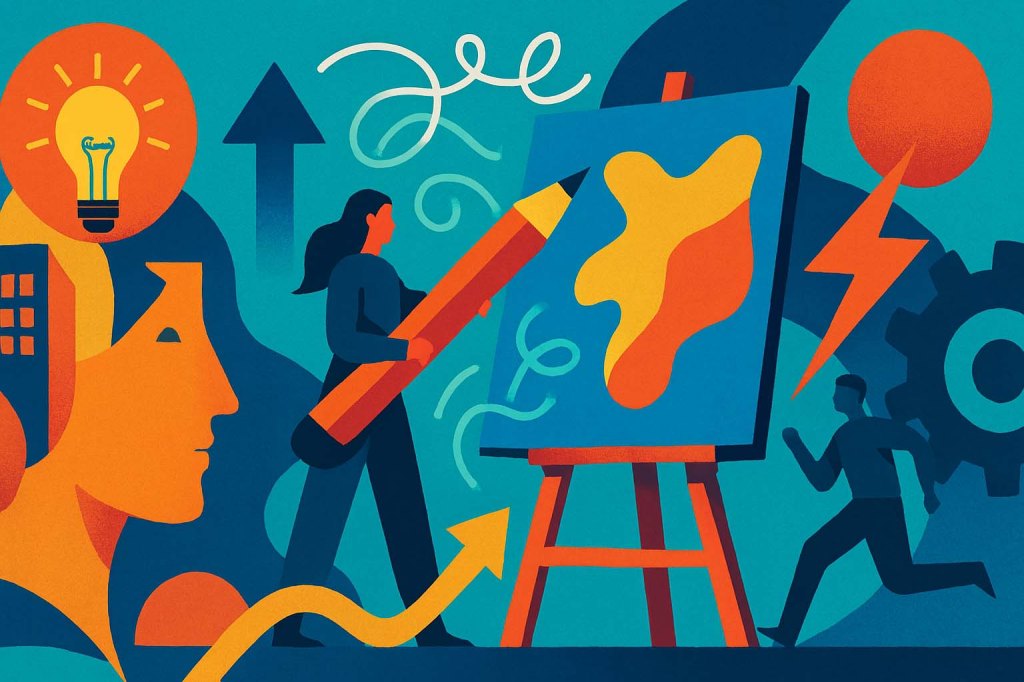
In closing, I return to an image that comforts me: the idea of a canvas. Ours has shifted from a physical one to a digital one and keeps shifting. But a canvas—literal or metaphorical—is just a surface. What matters is what we create on it. Generation X creatives have a lot yet to create. We carry the pigments of experience, the brushes of adaptability, and a palette of both old and new techniques. The canvas may be different, but it’s still ours to paint. And paint we will.
Works Cited
“Creative Jobs and Careers to Look Out For in 2025” – Skillshare Blog, accessed July 10, 2025. https://www.skillshare.com/en/blog/creative-jobs-2025/
“The Gen X Career Meltdown: What Happens When Your Job Becomes Obsolete?” – PBS, accessed July 10, 2025. https://www.pbs.org/wnet/amanpour-and-company/video/the-gen-x-career-meltdown-what-happens-when-your-job-becomes-obsolete/
“The Creative Economy Is Under Pressure to Prove ROI” – Digitalist Hub, accessed July 10, 2025. https://digitalisthub.com/events/the-creative-economy-is-under-pressure-to-prove-roi
Measuring Marketing ROI – How to Calculate for Success (2022) – Bannerflow Blog, accessed July 10, 2025. https://www.bannerflow.com/blog/measuring-marketing-roi-calculate-success
“The Gen X Career Meltdown: Navigating Job Obsolescence in Los Angeles” – Omar Zambrano (blog), accessed July 10, 2025. https://www.omarzambrano.com/post/the-gen-x-career-meltdown-what-happens-when-your-job-becomes-obsolete
“The Gen X Career Crisis: Navigating Ageism, Competition, and Instability” – The HR Digest, accessed July 10, 2025. https://www.thehrdigest.com/the-gen-x-career-crisis-navigating-ageism-competition-and-instability/
“Does the creative industry have a problem with ageism?” – Elespacio, accessed July 10, 2025. https://elespacio.net/articles/does-the-creative-industry-have-an-ageism-problem
“The Daily Heller: The Beginning of the End of Print Advertising” – Print Magazine, accessed July 10, 2025. https://www.printmag.com/daily-heller/the-daily-heller-the-beginning-of-the-end-of-print-advertising/
“Decline of newspapers” – Wikipedia, accessed July 10, 2025. https://en.wikipedia.org/wiki/Decline_of_newspapers
“Government says 40 percent of book publishing jobs are gone. Really?” – Jane Friedman, accessed July 10, 2025. https://janefriedman.com/government-says-40-percent-of-book-publishing-jobs-are-gone-really/
“Overview and key findings of the 2025 Digital News Report” – Reuters Institute (Oxford), accessed July 10, 2025. https://reutersinstitute.politics.ox.ac.uk/digital-news-report/2025/dnr-executive-summary
“The Obsolescence of Advertising in the Information Age” – The Yale Law Journal, accessed July 10, 2025. https://www.yalelawjournal.org/pdf/Woodcock_mshoufkm.pdf
“Is the creative industry ageist?” – Creative Recruiters (blog), accessed July 10, 2025. https://www.creativerecruiters.com.au/blog/2019/10/is-the-creative-industry-ageist
“Wrinkles in the System: Navigating Ageism in Advertising” – UF College of Journalism and Communications, accessed July 10, 2025. https://www.jou.ufl.edu/insights/wrinkles-in-the-system-navigating-ageism-in-advertising/
“Will AI Replace Graphic Designers?” – Coursera (article), accessed July 10, 2025. https://www.coursera.org/articles/will-ai-replace-graphic-designers
“The Role of Automation in Graphic Design – 2025 Graphic Design Trends” – Pixelixe Blog, accessed July 10, 2025. https://pixelixe.com/blog/the-role-of-automation-in-graphic-design/
“How AI is Changing the Graphic Design Professional Career” – University of Miami (Custom Career blog), accessed July 10, 2025. https://customcareer.miami.edu/blog/2025/02/04/how-ai-is-changing-the-graphic-design-professional-career/
“The Impact of Canva on Society and Graphic Design” – NumberAnalytics Blog, accessed July 10, 2025. https://www.numberanalytics.com/blog/canva-society-graphic-design-impact
Trueba, Fernando. “How Canva Disrupted Design: A $30B Success Story Through the MOAT Framework.” Medium, accessed July 10, 2025. https://medium.com/@fernandotrueba/how-canva-disrupted-design-a-30b-success-story-through-the-moat-framework-2ebf4cb73d1d
“As design is democratised, pro designers become essential…” – Design Week, accessed July 10, 2025. https://www.designweek.co.uk/as-design-is-democratised-pro-designers-become-essential/
“Design is being devalued — and we’re letting it happen” – LogRocket Blog, accessed July 10, 2025. https://blog.logrocket.com/ux-design/strategic-ux-vs-commoditized-design/
Inside the Multi-Generational Workforce: 2025 Report – iHire, accessed July 10, 2025. https://www.ihire.com/GenerationsReport2025
Harwood, Elizabeth. “Ageism in the Creative Industries is Real, and it’s Painful.” Medium, accessed July 10, 2025. https://medium.com/@elizabeth.harwood/ageism-in-the-creative-industries-is-real-and-its-painful-5d3f929eba93
“10 Traits of a Stellar In-House Creative Team (And How to Nurture Them)” – Workamajig Blog, accessed July 10, 2025. https://www.workamajig.com/blog/in-house-creative-team-traits
“Does the constant pressure to deliver great creative work stress the s**t out of any of you…?” – Reddit (r/advertising thread), accessed July 10, 2025. https://www.reddit.com/r/advertising/comments/9geibl/does_the_constant_pressure_to_deliver_great/
“Tell me challenges you’ve faced while working as a graphic designer please!!!” – Reddit (r/GraphicDesigning thread), accessed July 10, 2025. https://www.reddit.com/r/GraphicDesigning/comments/1ickdo9/tell_me_challenges_youve_faced_while_working_as_a/
““The Gen X Career Meltdown” in the NYT, March 28, 2025” – Reddit (r/Longreads thread), accessed July 10, 2025. https://www.reddit.com/r/Longreads/comments/1jm8pia/the_gen_x_career_meltdown_in_the_nyt_march_28_2025/
“AI for Graphic Design” – Noble Desktop (course description), accessed July 10, 2025. https://www.nobledesktop.com/classes/ai-graphic-design
“AI for Visual Design Course” – Designlab, accessed July 10, 2025. https://designlab.com/advanced/ai-for-design-course
“Best Prompt Engineering Courses & Certificates Online [2025]” – Coursera (search results page), accessed July 10, 2025. https://www.coursera.org/courses?query=prompt%20engineering
“Top Prompt Engineering Courses Online – Updated [July 2025]” – Udemy, accessed July 10, 2025. https://www.udemy.com/topic/prompt-engineering/
“Creative Automation: The Future of Design is Here (And It’s Amazing)” – DEV Community article, accessed July 10, 2025. https://dev.to/atforeveryoung/creative-automation-the-future-of-design-is-here-and-its-amazing-27fk
“Future-Proof Your Career: Upskilling for 2025 and Beyond” – Horton International, accessed July 10, 2025. https://hortoninternational.com/upskilling-in-2025/
“Graphic Designer Skills For Professional Success: A 2025 Guide” – TimesPro, accessed July 10, 2025. https://timespro.com/blog/graphic-designer-skills
“Graphic Designer Skills in 2025 (Top + Most Underrated Skills)” – Teal (blog), accessed July 10, 2025. https://www.tealhq.com/skills/graphic-designer
“How Print Designers Can Transition to Digital Design” – Skillcrush, accessed July 10, 2025. https://skillcrush.com/blog/how-to-transition-from-print-design-to-digital-design/
“Is UX Design a Good Career?” – Caltech Bootcamps (blog), accessed July 10, 2025. https://pg-p.ctme.caltech.edu/blog/ui-ux/is-ux-design-good-career
“How to Become an Art Director in 2025 (Next Steps + Requirements)” – Teal (career guide), accessed July 10, 2025. https://www.tealhq.com/how-to-become/art-director
“Art direction to UI/UX?” – Reddit (r/Design thread), accessed July 10, 2025. https://www.reddit.com/r/Design/comments/1jon5pt/art_direction_to_uiux/
“On the Democratization of Design” – IMG.LY blog, accessed July 10, 2025. https://img.ly/blog/on-the-democratization-of-design-ce731e9374f0/
“Creative Director Career Profile” – Meadows School of the Arts (SMU), accessed July 10, 2025. https://www.smu.edu/meadows/newsandevents/news/2024/creative-director-career-profile
“What is a Digital Creative Director?” – Creative Recruiters (role description), accessed July 10, 2025. https://www.creativerecruiters.com.au/design-and-creative-talent/digital-creative-director#:~:text=A%20Digital%20Creative%20Director%20is…
Job Posting: AI Research Engineer at Disney – Disney Careers, accessed July 10, 2025. https://jobs.disneycareers.com/job/glendale/ai-research-engineer/391/83547530464


Leave a comment